


PAINTERS & EYE DISEASES
Art reflects how the artist sees the world. But what if the artist has eye problems?
Painters and their works, whose names have been engraved in art history with golden letters, have given rise to many different theories over the years. Art movements that revolutionized their eras, unprecedented styles, boldly changing color palettes as the years went by, and more. Do you think many of these could be the result of the painter’s experienced eye problems? Could they have simply drawn what they saw?
Painters and their works, whose names have been engraved in art history with golden letters, have given rise to many different theories over the years. Art movements that revolutionized their eras, unprecedented styles, boldly changing color palettes as the years went by, and more. Do you think many of these could be the result of the painter’s experienced eye problems? Could they have simply drawn what they saw?


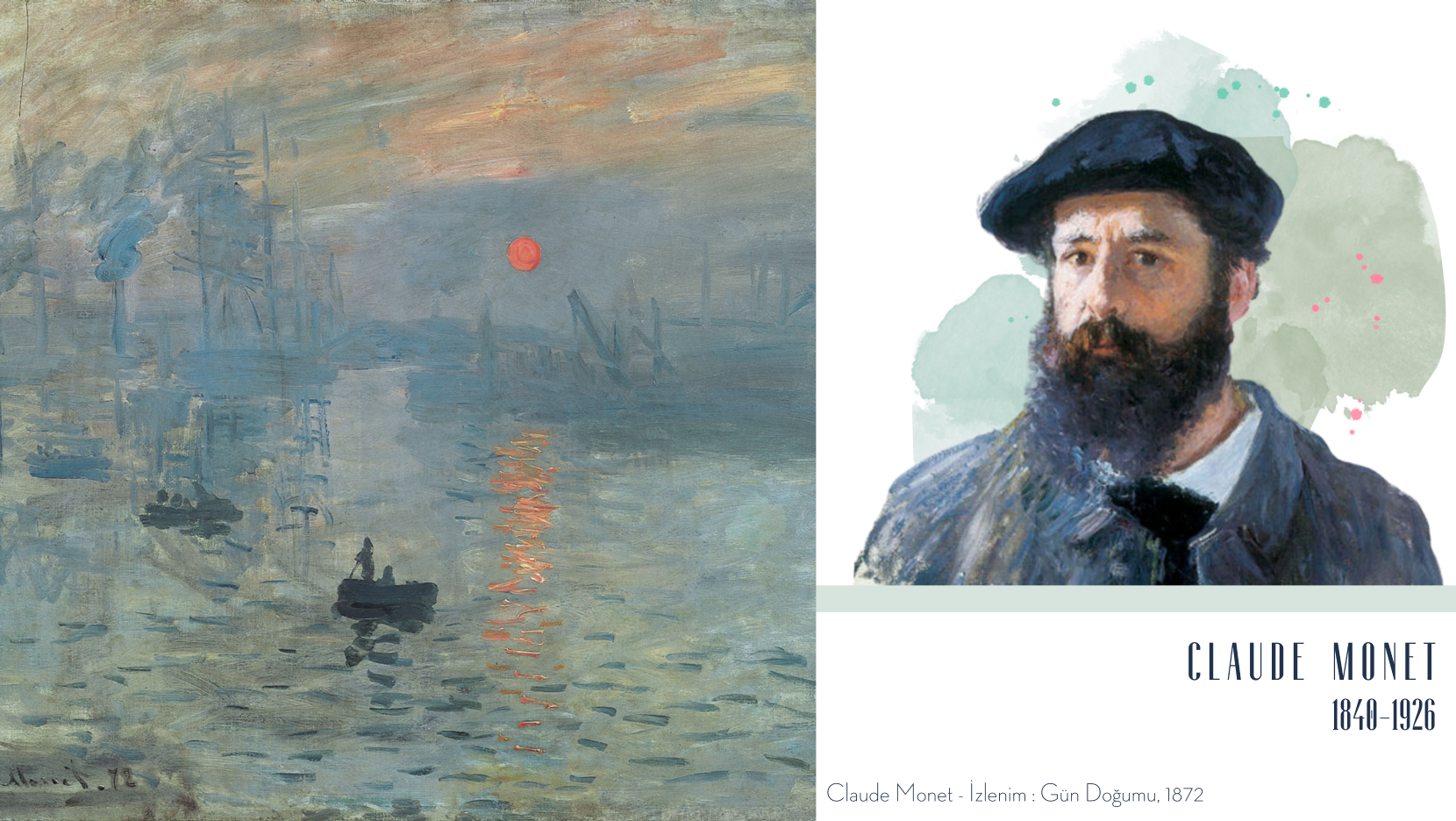
CLAUDE MONET
Born in Paris in 1840, Claude Monet’s works primarily focused on nature. Admiring the changes in light and shadows, Monet, fascinated by the play of light and shadow, repeatedly painted the same scene at different times. The developing cataract in Monet’s eye made it difficult for him to distinguish cold colors. After the illness, his works showed a clear dominance of bright yellow, orange, purple, and red hues. Monet frequently documented the impact of his changing vision due to cataracts on his artwork. He finally underwent cataract surgery in 1923, a procedure he had postponed for years.
EDGAR DEGAS
Born in Paris in 1834, Edgar Degas was a painter and sculptor. Preferring to paint scenes from everyday life, Degas is best known for his depictions of ballerinas and dancers. Unlike other impressionists, Degas chose to give life to his works in his studio and indoor settings rather than in open air. The primary reason for this was Degas’ inability to paint outdoors due to discomfort in his eyes. As his eye condition progressed, which he frequently mentioned in letters to his friends, Degas eventually stopped painting and focused more on sculpture.
REMBRANDT
Rembrandt Harmenszoon van Rijn was born in 1606 in Holland. A painter and printmaker, Rembrandt is known as the "painter of light and shadows" for his rich color choices and skillful use of light and shadow dances. Neurologists and ophthalmologists noticed in dozens of self-portraits examined that Rembrandt’s eyes were not correctly aligned. While the possibility of strabismus may initially seem like a disadvantage, some argue that his difficulty in perceiving depth when depicting the three-dimensional world actually facilitated painting on a two-dimensional canvas, providing an advantage.
MARY CASSATT
Mary Cassatt was born in 1844 in Pennsylvania. Despite being an Impressionist, Cassatt, who frequently depicted the relationship between mothers and children in her works, focused on form and details rather than light and atmosphere, distinguishing her from her contemporaries. Cassatt’s first vision impairment began at the age of 56. She often wrote about the decrease in her visual acuity and the darkening of her vision. In 1912, the ophthalmologist Edmund Landolt, who had previously treated Degas, diagnosed her with cataracts. Cassatt had to completely give up painting due to her eye problems when she reached the age of 71.
VAN GOGH
Van Gogh was born in 1853 in the Netherlands. Deciding to become a painter at the age of 27, Van Gogh packed 2,100 paintings and drawings into his short 10-year career. A prominent feature in Van Gogh’s works, often examined by art critics, neurologists, and ophthalmologists, is the warm and yellowish atmosphere in his paintings. The most notable theory about Van Gogh is that he might have had Xanthopsia, a condition causing a yellow tint in vision. The strongest evidence supporting this theory is the medication he was given during his stay at a mental hospital in 1889, which is known to cause Xanthopsia. Additionally, there’s speculation about glaucoma, suggested by the additional lines he drew around lighted objects, seen in works like "Starry Night." This phenomenon is also observed in glaucoma patients when looking at light sources.
LEONARDO DA VINCI
Leonardo di ser Piero da Vinci was born in 1452 in Italy. Da Vinci, who quickly gained attention with his talent, was accepted into the Guild of Painters and Sculptors in Florence when he was only 20 years old. Throughout the centuries, numerous theories have been proposed about Da Vinci’s artistic genius. A study published in 2018, based on a detailed analysis of Da Vinci’s self-portraits, claimed that he had intermittent exotropia (strabismus), and this condition could be a factor in his artistic genius. It is suggested that this condition might have provided an advantage by making it easier for him to paint on a two-dimensional canvas when depicting the three-dimensional world.
CAMILLE PISSARRO
French Impressionist painter Camille Pissarro was born in 1830 in the Virgin Islands. At the age of 12, he went to Paris to study and began receiving art education under the supervision of Auguste Savary. Pissarro started to develop his own style from the 1860s and, in the mid-1880s, focused intensively on pointillist works, contributing to the Pointillism movement. In the last 15 years of his life, Pissarro faced difficulties due to repeated infections around his right eye. Due to these chronic conditions, he created his works behind closed windows to avoid wind and dust.
EDVARD MUNCH
Expressionist painter Edvard Munch was born in Norway in 1863. Throughout his artistic career, he was influenced by various movements such as naturalism, impressionism, and symbolism. Known for his introverted and gloomy works in the early years of his career, Munch explored spiritual and emotional themes in his art. Undoubtedly, his most famous work from this period is "The Scream." Munch’s first eye problem began in 1930 with bleeding inside his right eye. Reports on Munch’s eyes, consulted by Professor Johan Ræder, indicate that the eye bleedings occurring in both eyes within six years significantly deteriorated his eye health and vision.
RENOIR
Renoir was born in 1841 in France. He started his apprenticeship with a porcelain painter at the age of 13 and, with the money he saved, entered the studio of the famous Swiss painter Charles Gleyre in 1862. His friendship with fellow studio students Claude Monet, Alfred Sisley, and Frédéric Bazille began during this period. Renoir depicted the modern aspects of Paris, focusing on sunlight and color changes in natural poses and settings. Known to be nearsighted, Renoir’s objects painted at close range are more distinct, while those in the distance appear more blurred. Throughout his career, Renoir became one of the most prolific Impressionists, creating nearly 6,000 works.
WILLIAM TURNER
Joseph Mallord William Turner was born in 1775 in England. Having an interest in art from a young age, Turner decided to become a painter at the age of 14. By the time he was 22, Turner was the youngest member of the Royal Academy. In the later years of his career, Turner used colors in a more transparent way, and his works almost turned into a convergence of pure light. Ophthalmologists who have studied Turner’s works for years have focused on the theory that he may have had mild color blindness in his early works and suffered from cataracts in his later works. Therefore, they argued that he actually depicted what he truly saw.
EL GRECO
El Greco was born in 1541 in Greece. The painter, whose real name is Doménikos Theotokópoulos, spent most of his life in Spain. In Spain, the artist became known as El Greco, meaning "The Greek." El Greco’s works are known for their vibrant colors and strong light/shadow contrasts. In his works, figures are elongated, bodies and limbs are unusually long, slender, and muscular. This characteristic of his works has divided researchers for years. Some researchers attribute the features of his works to a visual disorder, while others argue that the elongated lines are not a visual symptom but rather an artistic style.
CEZANNE
French painter Cézanne was born in 1839. The famous post-impressionist, considered the father of modern art and one of the most important figures in the development of Cubism. Having a different perception of nature than his contemporaries, Cézanne presents nature and space by emphasizing the contrast and tonal relationships of colors. Being nearsighted, Cézanne’s landscapes in his works appear blurry and out of focus. Paul Cézanne said, "To paint nature is not to copy the object but for the artist to become aware of his sensations." The painter’s words touch on a beautiful point – art is the artist reflecting what they see, feeling it with all their senses, regardless of how our sense of sight allows us to perceive it.
Born in Paris in 1840, Claude Monet’s works primarily focused on nature. Admiring the changes in light and shadows, Monet, fascinated by the play of light and shadow, repeatedly painted the same scene at different times. The developing cataract in Monet’s eye made it difficult for him to distinguish cold colors. After the illness, his works showed a clear dominance of bright yellow, orange, purple, and red hues. Monet frequently documented the impact of his changing vision due to cataracts on his artwork. He finally underwent cataract surgery in 1923, a procedure he had postponed for years.
EDGAR DEGAS
Born in Paris in 1834, Edgar Degas was a painter and sculptor. Preferring to paint scenes from everyday life, Degas is best known for his depictions of ballerinas and dancers. Unlike other impressionists, Degas chose to give life to his works in his studio and indoor settings rather than in open air. The primary reason for this was Degas’ inability to paint outdoors due to discomfort in his eyes. As his eye condition progressed, which he frequently mentioned in letters to his friends, Degas eventually stopped painting and focused more on sculpture.
REMBRANDT
Rembrandt Harmenszoon van Rijn was born in 1606 in Holland. A painter and printmaker, Rembrandt is known as the "painter of light and shadows" for his rich color choices and skillful use of light and shadow dances. Neurologists and ophthalmologists noticed in dozens of self-portraits examined that Rembrandt’s eyes were not correctly aligned. While the possibility of strabismus may initially seem like a disadvantage, some argue that his difficulty in perceiving depth when depicting the three-dimensional world actually facilitated painting on a two-dimensional canvas, providing an advantage.
MARY CASSATT
Mary Cassatt was born in 1844 in Pennsylvania. Despite being an Impressionist, Cassatt, who frequently depicted the relationship between mothers and children in her works, focused on form and details rather than light and atmosphere, distinguishing her from her contemporaries. Cassatt’s first vision impairment began at the age of 56. She often wrote about the decrease in her visual acuity and the darkening of her vision. In 1912, the ophthalmologist Edmund Landolt, who had previously treated Degas, diagnosed her with cataracts. Cassatt had to completely give up painting due to her eye problems when she reached the age of 71.
VAN GOGH
Van Gogh was born in 1853 in the Netherlands. Deciding to become a painter at the age of 27, Van Gogh packed 2,100 paintings and drawings into his short 10-year career. A prominent feature in Van Gogh’s works, often examined by art critics, neurologists, and ophthalmologists, is the warm and yellowish atmosphere in his paintings. The most notable theory about Van Gogh is that he might have had Xanthopsia, a condition causing a yellow tint in vision. The strongest evidence supporting this theory is the medication he was given during his stay at a mental hospital in 1889, which is known to cause Xanthopsia. Additionally, there’s speculation about glaucoma, suggested by the additional lines he drew around lighted objects, seen in works like "Starry Night." This phenomenon is also observed in glaucoma patients when looking at light sources.
LEONARDO DA VINCI
Leonardo di ser Piero da Vinci was born in 1452 in Italy. Da Vinci, who quickly gained attention with his talent, was accepted into the Guild of Painters and Sculptors in Florence when he was only 20 years old. Throughout the centuries, numerous theories have been proposed about Da Vinci’s artistic genius. A study published in 2018, based on a detailed analysis of Da Vinci’s self-portraits, claimed that he had intermittent exotropia (strabismus), and this condition could be a factor in his artistic genius. It is suggested that this condition might have provided an advantage by making it easier for him to paint on a two-dimensional canvas when depicting the three-dimensional world.
CAMILLE PISSARRO
French Impressionist painter Camille Pissarro was born in 1830 in the Virgin Islands. At the age of 12, he went to Paris to study and began receiving art education under the supervision of Auguste Savary. Pissarro started to develop his own style from the 1860s and, in the mid-1880s, focused intensively on pointillist works, contributing to the Pointillism movement. In the last 15 years of his life, Pissarro faced difficulties due to repeated infections around his right eye. Due to these chronic conditions, he created his works behind closed windows to avoid wind and dust.
EDVARD MUNCH
Expressionist painter Edvard Munch was born in Norway in 1863. Throughout his artistic career, he was influenced by various movements such as naturalism, impressionism, and symbolism. Known for his introverted and gloomy works in the early years of his career, Munch explored spiritual and emotional themes in his art. Undoubtedly, his most famous work from this period is "The Scream." Munch’s first eye problem began in 1930 with bleeding inside his right eye. Reports on Munch’s eyes, consulted by Professor Johan Ræder, indicate that the eye bleedings occurring in both eyes within six years significantly deteriorated his eye health and vision.
RENOIR
Renoir was born in 1841 in France. He started his apprenticeship with a porcelain painter at the age of 13 and, with the money he saved, entered the studio of the famous Swiss painter Charles Gleyre in 1862. His friendship with fellow studio students Claude Monet, Alfred Sisley, and Frédéric Bazille began during this period. Renoir depicted the modern aspects of Paris, focusing on sunlight and color changes in natural poses and settings. Known to be nearsighted, Renoir’s objects painted at close range are more distinct, while those in the distance appear more blurred. Throughout his career, Renoir became one of the most prolific Impressionists, creating nearly 6,000 works.
WILLIAM TURNER
Joseph Mallord William Turner was born in 1775 in England. Having an interest in art from a young age, Turner decided to become a painter at the age of 14. By the time he was 22, Turner was the youngest member of the Royal Academy. In the later years of his career, Turner used colors in a more transparent way, and his works almost turned into a convergence of pure light. Ophthalmologists who have studied Turner’s works for years have focused on the theory that he may have had mild color blindness in his early works and suffered from cataracts in his later works. Therefore, they argued that he actually depicted what he truly saw.
EL GRECO
El Greco was born in 1541 in Greece. The painter, whose real name is Doménikos Theotokópoulos, spent most of his life in Spain. In Spain, the artist became known as El Greco, meaning "The Greek." El Greco’s works are known for their vibrant colors and strong light/shadow contrasts. In his works, figures are elongated, bodies and limbs are unusually long, slender, and muscular. This characteristic of his works has divided researchers for years. Some researchers attribute the features of his works to a visual disorder, while others argue that the elongated lines are not a visual symptom but rather an artistic style.
CEZANNE
French painter Cézanne was born in 1839. The famous post-impressionist, considered the father of modern art and one of the most important figures in the development of Cubism. Having a different perception of nature than his contemporaries, Cézanne presents nature and space by emphasizing the contrast and tonal relationships of colors. Being nearsighted, Cézanne’s landscapes in his works appear blurry and out of focus. Paul Cézanne said, "To paint nature is not to copy the object but for the artist to become aware of his sensations." The painter’s words touch on a beautiful point – art is the artist reflecting what they see, feeling it with all their senses, regardless of how our sense of sight allows us to perceive it.