


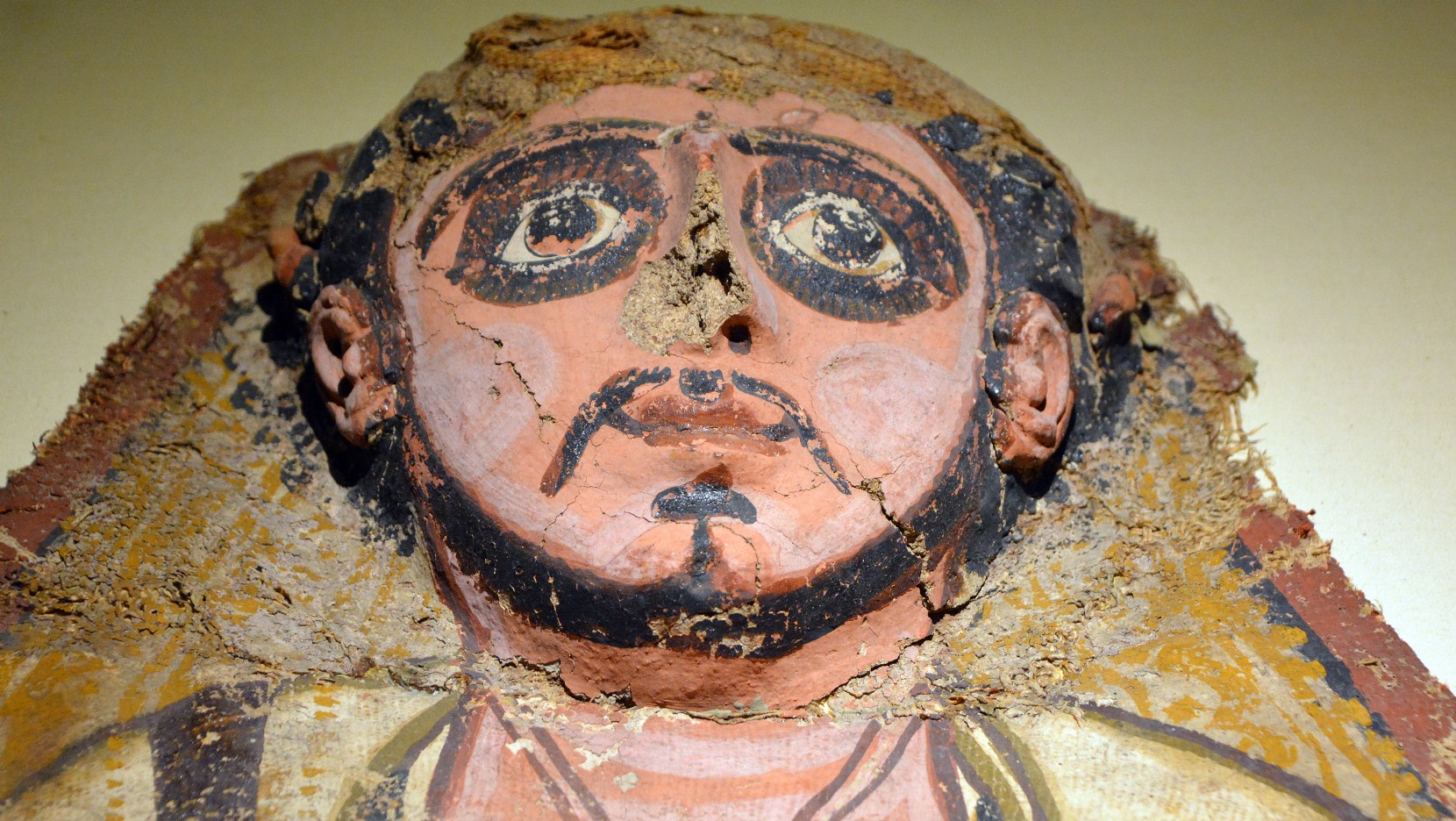
FAYYUM PORTRAITS
Portrait paintings have been used in many civilizations to immortalize people of the time. Among them, the most unusual portraits are undoubtedly the Fayum Portraits. Fayum, located in Egypt, was conquered by Alexander the Great in 332 B.C. and later ruled by the Ptolemies, Greek dynasties. Approximately thirty percent of the population in Fayum consisted of Ancient Greeks. The Ancient Greeks, who adopted the Egyptian tradition of mummification, also began to mummify their dead. The Romans, who later took over this tradition, differed from others by placing wooden mummy portraits on the faces of the mummies instead of masks. Therefore, Fayum portraits became works that were influenced by both Egyptian and Roman cultures. In these portraits, which closely resemble each other, only the eyes are depicted disproportionately large compared to the face, enhancing the impact of the portraits.


